The Hidden Cost of “Good Enough” in Your Revenue Cycle
May 8, 2026
Your KPIs look fine. Denial rates are stable. Collections are consistent. Your team is experienced and knows how to get things done. And yet, cash still feels slower than it should; A/R edges up, and staff time always feels stretched thin.
Some of the most expensive problems in the revenue cycle aren’t obvious. They’re the small, everyday inefficiencies that don’t trigger alarms. But they quietly add up across scheduling, billing, and collections.

Where Is Revenue Leakage Most Commonly Missed?
Revenue leakage often occurs in workflows that feel “good enough” but still yield missed patient appointments, delayed patient payments, too many manual claim follow-ups, and limited visibility into performance trends. Individually, these issues seem manageable. Together, they create a measurable financial drag on your cash flow.
No-Shows: The Cost of an Empty Slot
You’ve seen this before: a full schedule on paper, but gaps form throughout the day from last-minute cancellations and patient no-shows.
While no-show rates vary by specialty and location, missed appointments are a significant financial drain. According to industry benchmarking data from the Medical Group Management Association (MGMA), even small inefficiencies in scheduling and patient throughput can have a measurable revenue impact as they compound.
Let’s look at a conservative example:
3 providers
20 patients per day each = 60 appointments
Average reimbursement per visit = $150
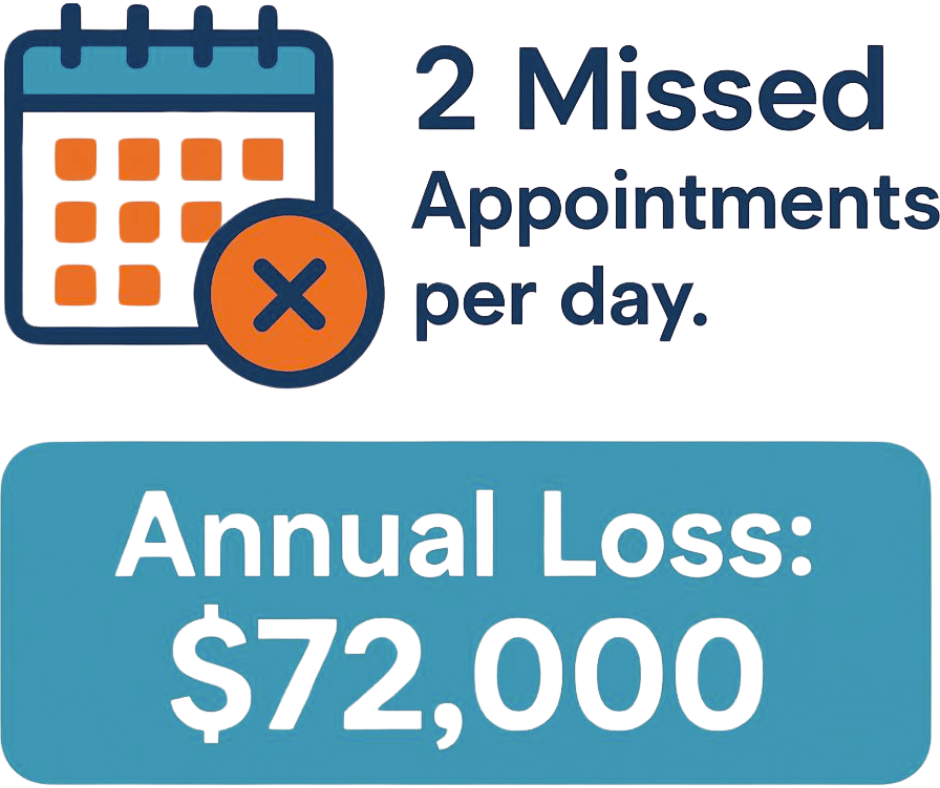
Just 2 missed appointments per day
This leads to:
Daily loss: $300
Monthly loss (~20 days): $6,000
Annual loss: $72,000
Even small gaps in the schedule add up quickly over time when they’re consistent.
Patient A/R: The Slow Burn
Patient balances don’t usually feel urgent until they start aging. The older the balances get, the less likely they are to be collected.
According to the Healthcare Financial Management Association (HFMA), patient financial responsibility has increased significantly over time, creating new challenges for collecting balances. HFMA’s research suggests that confusion and lack of clarity directly impact collections.
Now consider this example:
Monthly patient responsibility: $200,000
20% remains uncollected past 90 days (we know this is tragic, but it happens)
That’s $40,000 sitting in aging A/R every month.
The longer it sits, the harder it becomes to collect. Not because patients refuse to pay, but because the process breaks down.
Upfront Uncertainty: Why Patients Delay Payment
Unexpected bills are one of the reasons for delayed payments or patient A/R getting written off. HFMA’s research also shows that patients frequently struggle to understand what they owe and why.
When patients don’t have clarity:
They hesitate to pay up front
They question balances later
Payments get pushed further into A/R
Improvements in transparency can shift payment timing significantly. Providing a patient cost estimate before or at the time of services allows for prepayments.
Payment Friction: Intent Doesn’t Equal Action
Most patients intend to pay their bill, but intent doesn’t always lead to action, especially when the payment process isn’t simple.
According to McKinsey & Company, improving the healthcare financial experience (particularly through convenience and transparency) can significantly influence patient payment behavior.
Now apply a small improvement:
$200,000 in monthly patient balances
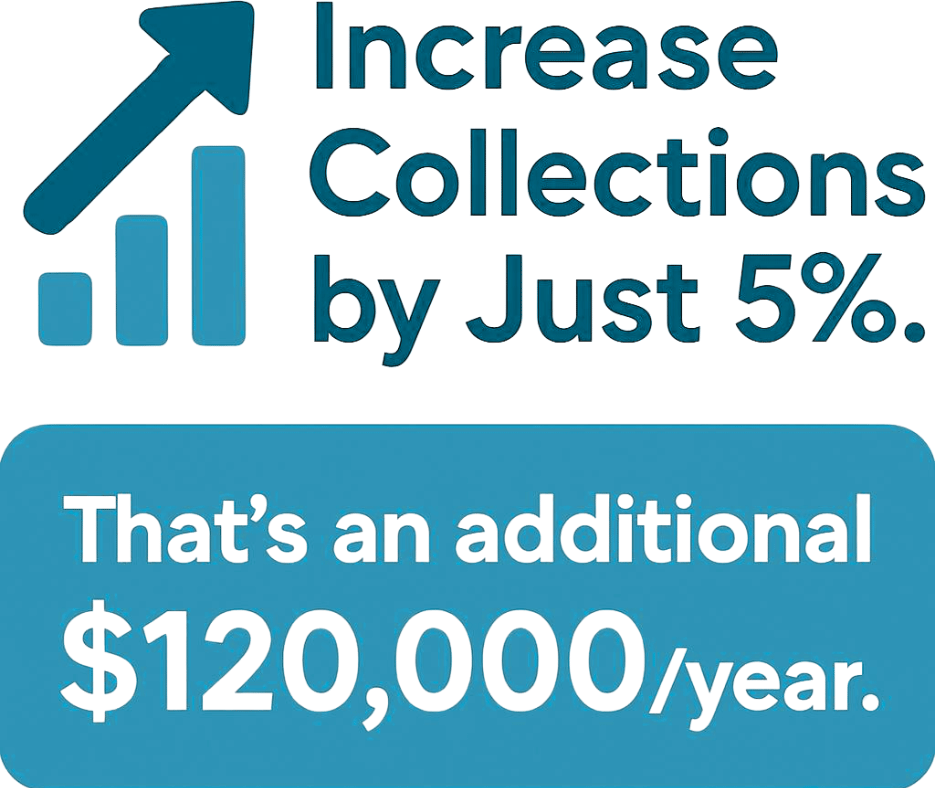
Increasing collections by just 5%
That’s an additional $10,000/month or $120,000/year
Most patients intend to pay their bill, but intent doesn’t always lead to action, especially when the payment process isn’t simple.
Based on McKinsey & Company’s findings, improving the healthcare financial experience (particularly through convenience and transparency) can significantly influence patient payment behavior.
Access Barriers: Missed Revenue Before It Starts
Scheduling gaps don’t always show up in reports, but they definitely impact revenue. When patients face challenges such as limited hours of availability, long hold times, or no ability to schedule online, they’re less likely to complete scheduling.
Based on McKinsey’s healthcare consumer insights, patients increasingly expect digital and on-demand access to healthcare services. Convenience plays a growing role in provider selection.
Even small missed opportunities matter in this example:
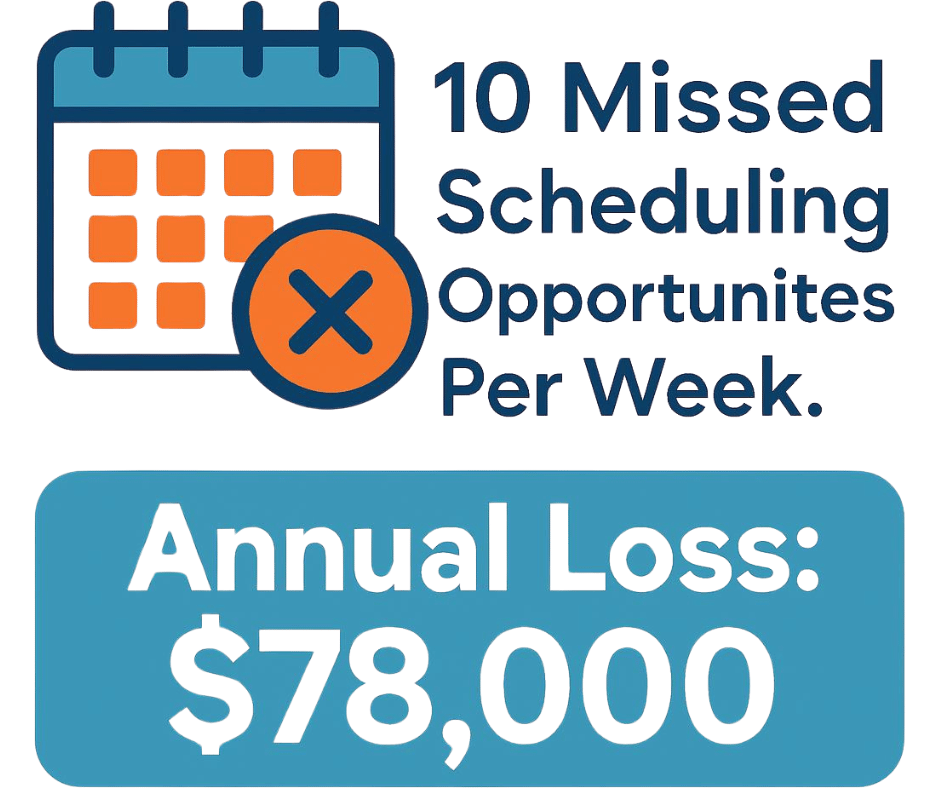
10 missed scheduling opportunities per week (just 2 per business day not scheduled or missed)
Average visit value: $150
Weekly loss: $1,500
Annual loss: $78,000
Online access isn’t just operational, it’s revenue in the bank.
Claim Follow-Up: The Labor Cost No One Tracks
Manual claim follow-up is one of the most labor-intensive parts of the revenue cycle. It’s easy to underestimate the real cost of staff time. Industry data shows that 25% of claims require some form of rework or follow-up.

Let’s apply that to an example:
1,000 claims per month
25% require follow-up = 250 claims
10 minutes per claim to follow up
~42 hours per month
At $20/hour:
$840/month
Over $10,000/year
And that’s just labor cost. This doesn’t include delays in reimbursement or claims requiring multiple follow-ups.
Visibility Gaps: You Can’t Fix What You Can’t See

Most organizations have reporting tools. But do they really provide clarity? According to industry analysis, lack of visibility is a major contributor to inefficiency in RCM workflows. You can’t fix what you don’t know.
Without actionable insight:
Trends go unnoticed
Bottlenecks persist
Performance plateaus
Bringing It Together: Small Gaps, Big Impact
Individually, none of these issues seems catastrophic. A few missed appointments. Some aging balances. A bit of extra follow-up work. But together?
They represent hundreds of thousands of dollars in:
Lost revenue
Delayed cash flow
Avoidable operational cost
The common thread across all of these challenges isn’t effort, it’s consistency. Reducing friction in the revenue cycle doesn’t require more staff. It requires:
More consistent patient engagement
Easier ways for patients to take action
Better visibility into performance
Fewer manual steps across workflows
The Bottom Line
Here’s where modern practice management systems keep evolving. Instead of treating these as separate tools, platforms like OpenPM bring together:
Automated appointment reminders
Patient balance notifications
Online scheduling and payments
Patient responsibility estimation
Real-time claim status visibility
Integrated analytics and business intelligence
Each feature addresses a potential point of friction: reducing delays, improving cash flow, and making day-to-day operations more efficient.